

The roof’s traditional purpose – and why it’s no longer enough
For decades, the primary function of a roof was relatively straightforward: protect a building from the elements while providing durability and weather resistance. While these fundamentals remain essential, the role of the roof is evolving rapidly as sustainability targets, energy efficiency requirements and renewable energy technologies become increasingly important across the built environment.
Roofs as active contributors to building performance
Today, roofs are being viewed not simply as a protective layer, but as an active component of building performance. Whether through solar energy generation, improved thermal efficiency, rainwater management or biodiversity enhancement, the roof is becoming a key contributor to wider environmental and operational objectives.
Solar integration driving a new era of roofing
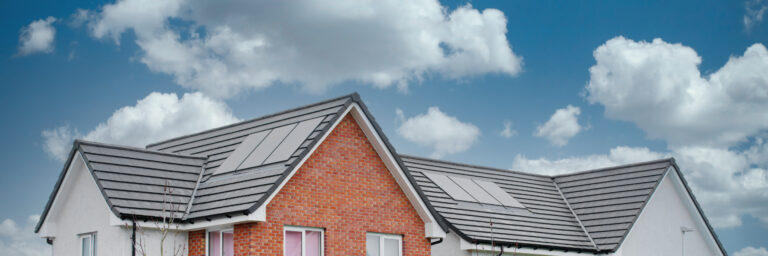
One of the most significant developments is the growing integration of solar technologies. While photovoltaic panels have been installed on commercial and residential roofs for many years, increasing emphasis on decarbonisation and energy security is driving wider adoption. Manufacturers are also developing solar-ready roofing systems and building-integrated photovoltaic (BIPV) products that combine weather protection with energy generation.
Sustainability shaping product innovation
At the same time, sustainability considerations are influencing roofing product development more broadly. Demand is increasing for products with lower embodied carbon, higher recycled content and improved environmental credentials. Green and blue roof systems are also attracting greater interest, particularly within urban environments where biodiversity, surface water management and planning requirements are becoming increasingly important.
Regulation and Net Zero targets accelerating change
Regulatory change is another major influence. Building regulations continue to place greater emphasis on energy efficiency and building performance, while wider Net Zero ambitions are encouraging building owners and developers to consider how roofing systems can contribute to long-term sustainability objectives. As a result, roofing products are increasingly being specified as part of a whole-building performance strategy rather than as standalone construction elements.
Alongside sustainability drivers, the industry continues to face practical challenges, including skills shortages and productivity pressures. This is encouraging manufacturers to develop roofing systems that are easier and quicker to install, while offsite construction methods and digital technologies are helping to improve efficiency across the supply chain.
Looking ahead: the roof as a multi-functional asset
Looking ahead, the roofing market is likely to continue evolving as building performance requirements increase and renewable energy technologies become more widely adopted. While protection from the weather will always remain the roof’s primary function, its role within the modern built environment is expanding considerably.
Increasingly, the roof is becoming an asset that can generate energy, improve sustainability outcomes and support wider building performance objectives – a trend that is expected to influence product development, specification and investment decisions across the sector for years to come.
Roofing Market Report by Barbour ABI
This report provides a comprehensive analysis of the UK roofing products market, covering roof tiles and slates, flat roof membranes, metal roofing systems and rooflight products. It examines market size, structure and forecast growth prospects through to 2030, alongside demand across residential, commercial, industrial, public sector, critical infrastructure and data centre applications.
Click below to view this report on our store website where you can see an exhaustive list of the table of contents, market summary, and more.
Contents


