

South East England Zone – Culham Campus
Specifically mentioned in the AI Opportunities Action Plan, Culham, Oxfordshire was the first announced AI Growth Zone.
Culham Science is an existing government site with the UK Atomic Energy Authority’s headquarters on site. The campus already has access to a large amount of power as well as land.
Due to the research and talent already working within the area, the government has suggested that the site would be an ideal testing ground for how sustainable energy sources could supply AI’s increasing power demands.
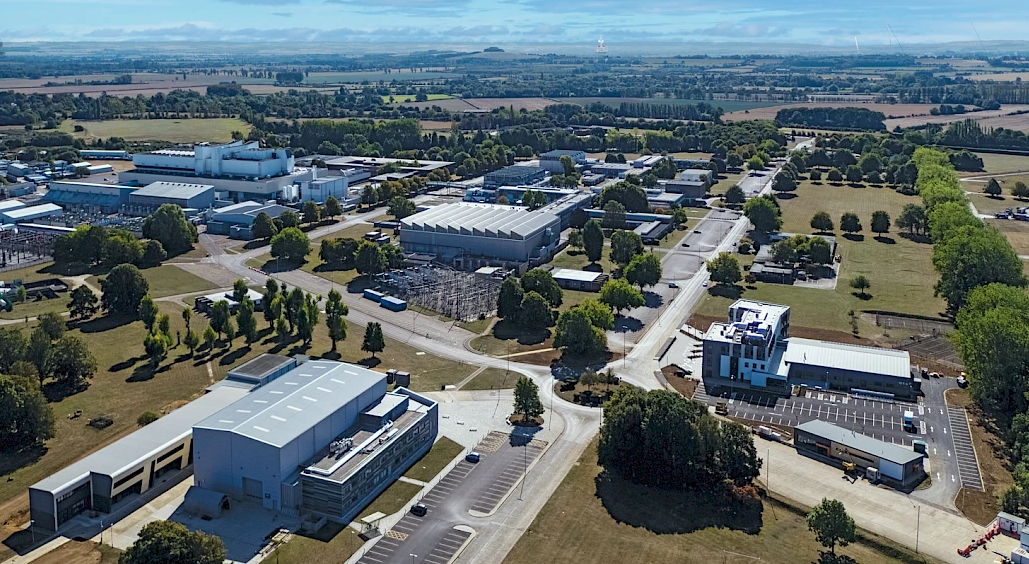
The 100MW Culham Campus AI Data Centre is due to be submitted for approval, Project ID 12834702.
Valued at £100m the description in Find a Tender suggests an opportunity to supply heating for the local community through its waste heat supply.
Aspirations are stated to have the data centre campus completed in five years upon planning approval. Plans suggest that the project will have the capacity of 100MW but could scale to 500MW in advanced phases.
North East England Zone – Cobalt Park and Cambois/Blyth
This AI Growth Zone was chosen for its existing data centre foundations such as the Stellium Data Centre in Cobalt Park as well as having access to the UK’s largest source of low-carbon and renewable energy.
Located in Cobalt Park, Newcastle, the Stellium Data Centre Campus is an existing operation since 2016. According to Stellium’s website, Stellium is the secure UK cable landing station for the international subsea fibre cables from the USA and the subsea fibre cables from the Nordics to Mainland Europe.
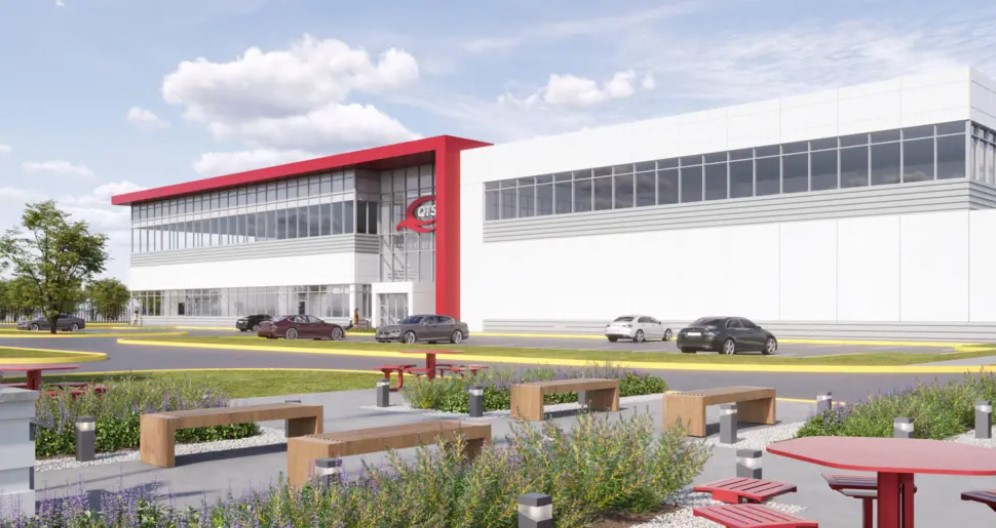
The £10bn Northumberland Energy Park New Cambois AI Data Centre project consists of the erection of 10 data centre buildings totalling up to 540,000 square metres gross internal area. When completed, the data centre campus will have a capacity of 720MW, Project ID 12785975. This project is currently at the outline approval stage.
Enabling works were set to commence in late 2025, Barbour ABI users can review this portion of the project with Project ID 12855145.
Planned to work alongside the Cambois Campus, the major Stargate Project UK has been paused due to regulation and energy costs according to a spokesperson from OpenAI. The project was intended to support wider adoption of AI usage in the UK, create thousands of jobs, and produce thousands of computer chips for OpenAI.
North Wales Zone – Prosperity Parc and Trawsfynydd
North Wales was chosen for its proximity to significant renewable energy assets, including the planned Wylfa small modular reactor (SMR) site on Anglesey.
The zone spans Prosperity Parc on Anglesey and Trawsfynydd in Gwynedd, with the Anglesey Freeport providing additional investment infrastructure and the Menai Strait corridor offering substantial available land for development.
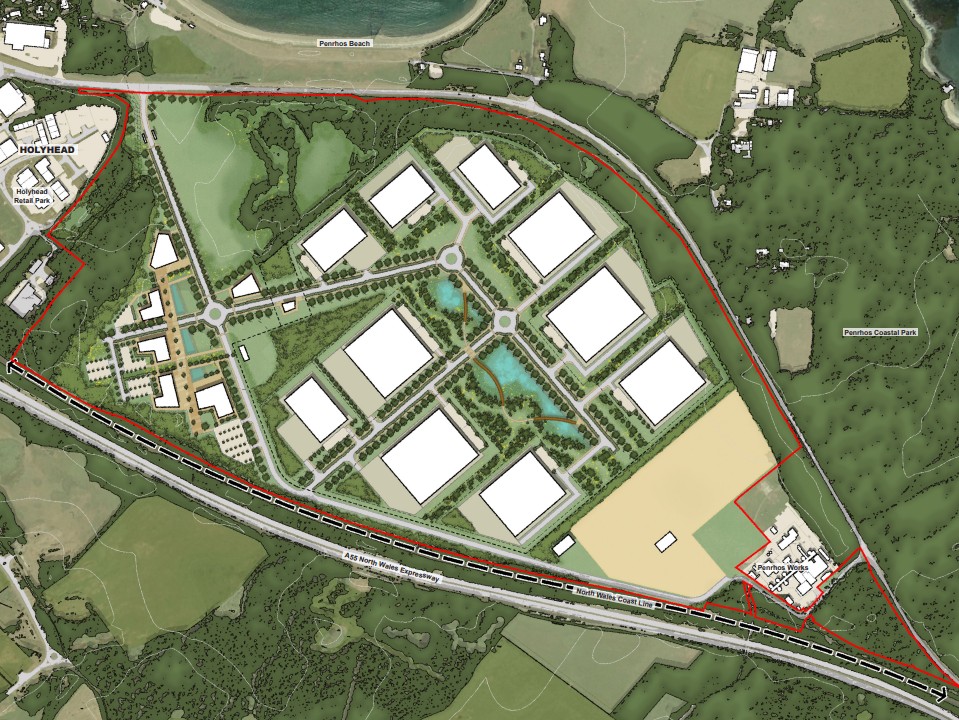
Outline planning was granted in 2025 for the £1bn Prosperity Parc Data Centre in Anglesey, Project ID 12824814. The proposed mixed development is set to provide new employment floorspace including up to 238,000sqm of data centres, up to 10,000sqm of office space, up to 5,000sqm of research and development space and battery energy storage with a capacity of 349MW.
Alongside Prosperity Parc, Trawsfynydd has been named as an AIGZ potentially due to the former nuclear power station space available. No plans have been announced for this area, yet.
South Wales Zone – M4 Corridor and Newport to Bridgend
South Wales has been confirmed as an AIGZ due to its established position as the UK’s largest data centre hotspot outside of London due to Vantage Data Centres’ existing Newport campus. The M4 Corridor between Newport and Bridgend offered a large supply of brownfield sites making it suitable for large scale data centre development.
Newport’s 46-acre Vantage Data Centre Campus CWL1 boasts a rare connection to the UK SuperGrid at 400kV and powered by 100% renewable energy according to their website.
Two more data centre projects by Vantage Data Centres are currently planned. The £285m Bro Tathan CWL2 Data Centre Campus is set to erect a 148MW data centre has received approval from the Vale of Glamorgan Council, Project ID 12727863. They’ve also received outline approval for their £20m Brigend Data Centre Campus built on a former Ford car manufacturing plant, Project ID 12829807.
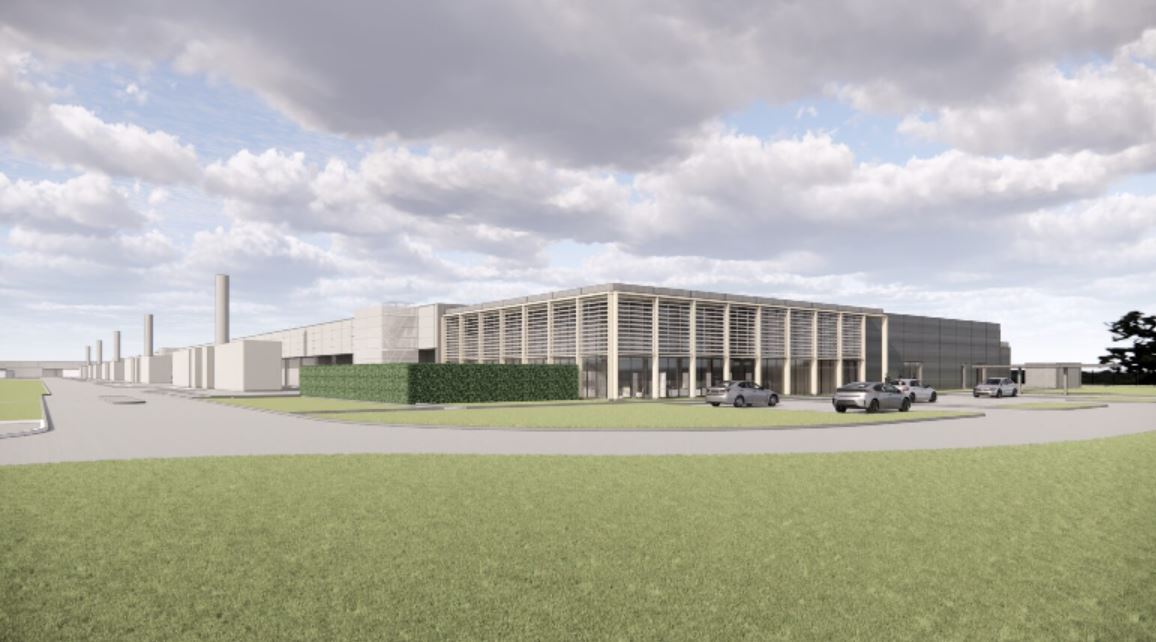
Currently underway is the £400m Microsoft Imperial Park Data Centre in Newport with a confirmed completion date of January 2027, Project ID 12673794.
Carbon3.AI has proposed the redevelopment of a corner of a former Newport steelworks site, specifically the Liberty Steel site, to build a £1m Data Centre. They have received detail approval and are expected to begin working on site in December 2026, Project ID 12888824.
Scotland Zone – North Lanarkshire
North Lanarkshire, Scotland was chosen on the basis of DataVita’s existing data centre presence at Chapelhall as well as the area’s surplus of renewable energy generation.
This land, settled between Glasgow and Edinburgh, and the access to available industrial land has made it reportedly the most viable location in Scotland for hyperscale data centre construction.
The existing DV1 Data Centre Campus in Chapelhall, Lararkshire by DataVita opened in 2016. It has 24MW capacity with plans to expand to 40MW and is the only facility in Scotland that is Uptime Institute Tier III certified for both design and construction.
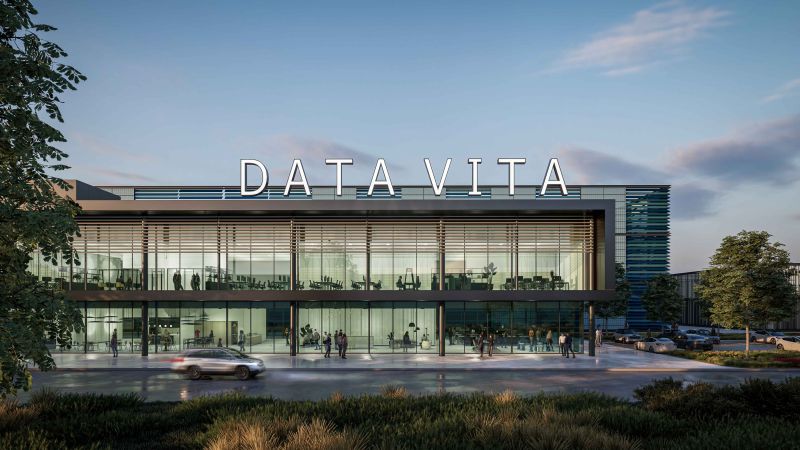
DataVita’s £320m DV3 Data Centre also in Chapelhall has received detail approval, Project ID 12886517. The development is due to be built on a brownfield site and will sit adjacent to DataVita’s existing DV1 Data Centre Campus.


