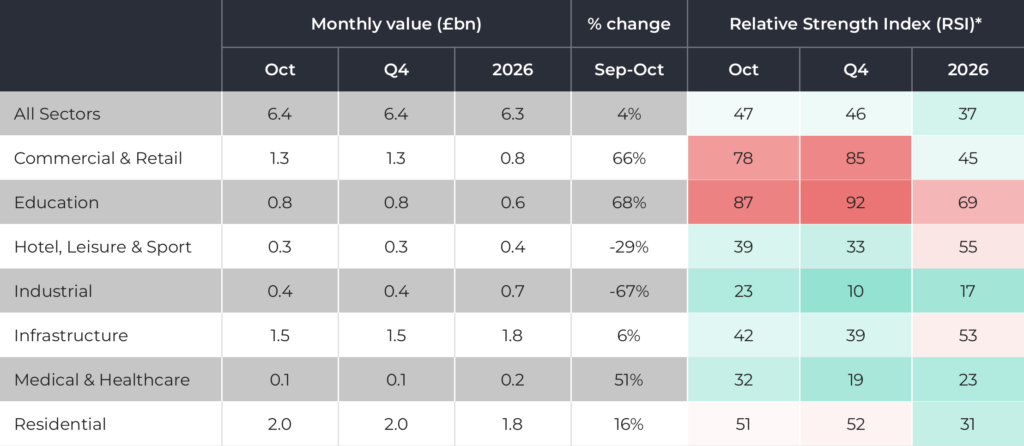
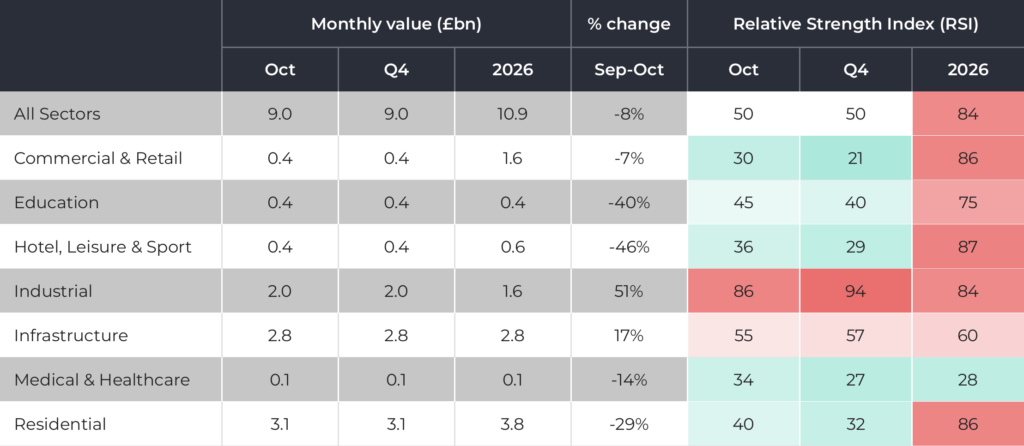
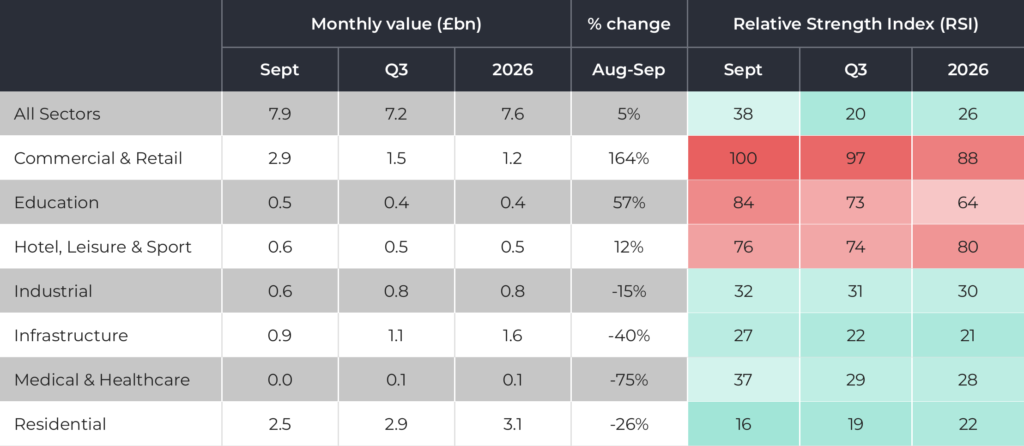
October showed a market that is steady at the delivery end, with awards holding slightly above their 2026 average at £6.4bn. Approvals eased to their lowest level of the year, while September applications reached £7.9bn, boosted by a single major data centre in the South East.
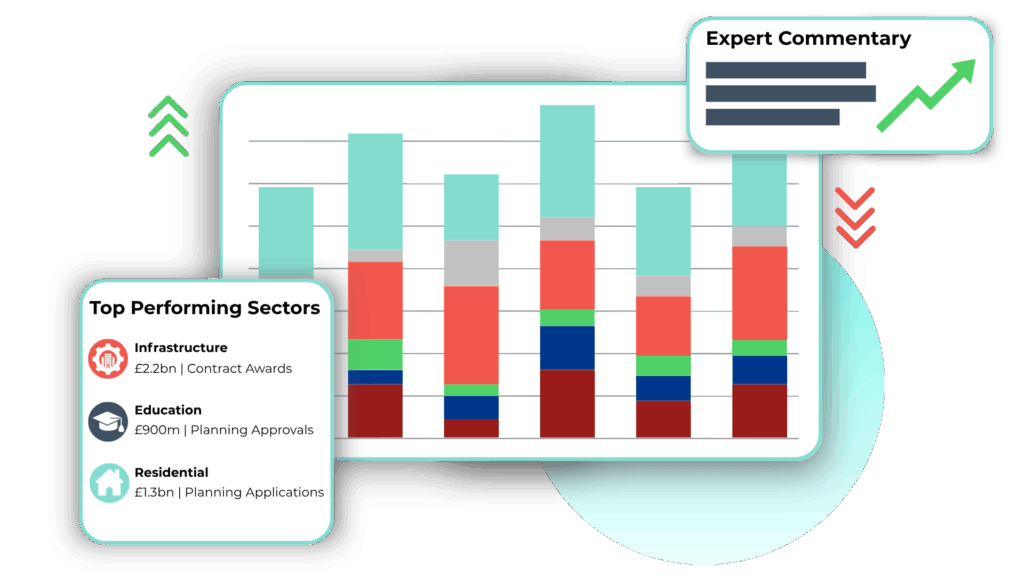
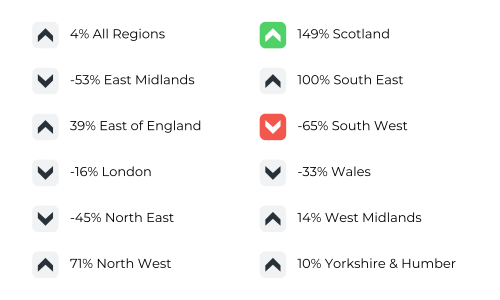
Energy and data infrastructure continue to set the pace. Battery storage and solar schemes dominated the largest approvals, particularly in Scotland and the East Midlands, while two data centres moved to contract in Scotland and Wales. With another £2.3bn data centre campus entering planning, the sector looks set to remain a key source of large-scale work.
Residential activity was mixed. Approvals slowed to their lowest level since February, but awards grew for a third consecutive month, suggesting schemes consented earlier in the year are now progressing to site. Education also stood out, with awards reaching their highest value of 2026.
Medical & Healthcare remains the clear weak spot, with low values across applications, approvals and awards. Much of the wider market also continues to rely on a small number of very large projects, so monthly totals can move sharply with the timing of individual schemes.
The October budget had little to say about many of the major issues affecting the Construction sector. Departmental capital budgets face a 1% reduction over three years, diverting £3 billion away from standard infrastructure to defence spending. While defence construction (barracks, military housing) will rise, standard civil engineering pipelines are being squeezed.
Heading into the final months of the year, steady awards and a strong flow of energy approvals point to a reasonable pipeline of work. However, the softer approvals total is worth watching to see whether it reflects a temporary dip or a slower flow of consents into 2027.